Mapping The Neighbourhood | Map 8
We encounter different contemporary art galleries and navigate the contexts influencing the work these galleries do.
Throughout the international contemporary art community, gallery spaces conduct vital cultural work that supports artists and creative communities. Their locations provide contexts which help to shape this work, too. Whether situated in a quiet pocket of a bustling inner-city or operating in an artistic hub among a collection of warehouses, we explore different contemporary galleries by mapping their surrounding cities and districts to better understand the many parts of our global art neighbourhood.
This month, we’re focusing on WHATIFTHEWORLD (Cape Town, South Africa), Suburbia Contemporary (Barcelona, Spain), Goodman Gallery (Johannesburg and Cape Town, South Africa, London, UK, and New York, USA), kó (Lagos, Nigeria), and EBONY/CURATED (Cape Town and Franschhoek, South Africa).
WHATIFTHEWORLD
Cape Town, South Africa
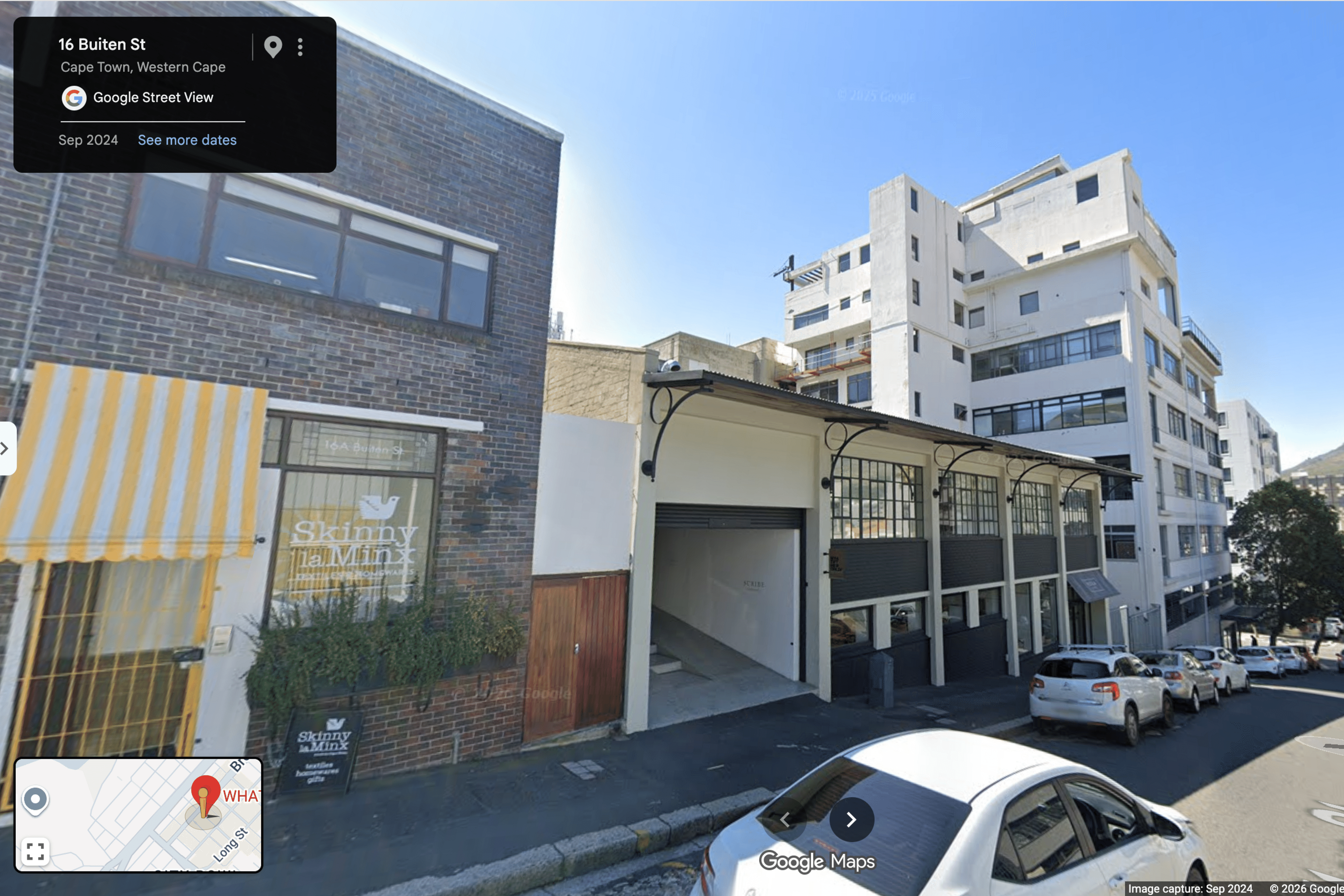
ON THE MAP | WHATIFTHEWORLD is surrounded by Cape Town's creative communities in its inner city. Image courtesy of Google Maps 2026.
WHATIFTHEWORLD promotes curiosity and thought through its programming, situated amongst the trendy cafes and design spaces in Cape Town’s Upper Bree Street precinct.
WHATIFTHEWORLD’s programming holds a strong focus on Africa and the African diaspora, representing influential artists who engage with global and local contemporary art and socio-political contexts. The gallery’s location reflects this expansive cultural attitude, where contemporary conversations engage local and international scopes, as seen in the cuisines, design, and creative spaces neighbouring the space.
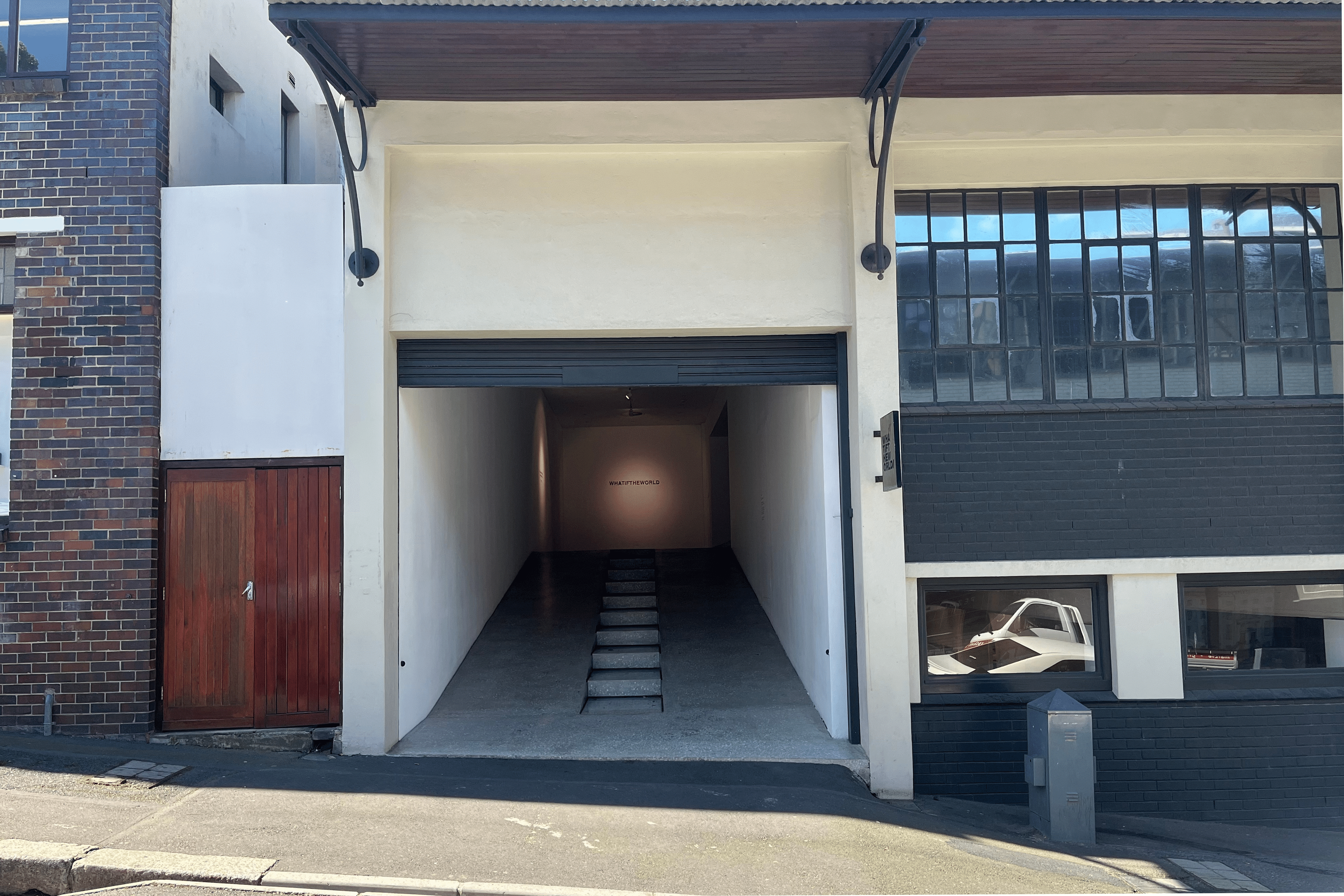
A view of the gallery entrance, offering a moment of quiet off the busy city street. Image courtesy of WHATIFTHEWORLD.
WHATIFTHEWORLD’s Akshar Maganbeharie gave us an idea of the gallery’s surrounding community: “Our gallery is located in the Upper Bree Street precinct, surrounded by a variety of cafes and restaurants such as A33, Cafe Frank, Between Us and Aperitif. We are also neighbours with design spaces such as Pezula Interiors, who are our next-door neighbours on Buiten Street, and Curacion Collection on Orphan Street. Recently opened is Lion’s Bread in The Corner Store on Bree, where we love to grab our morning coffees and pastries. We are also within walking distance of other galleries on Bree, Loop, and Church Street, such as RESERVOIR, 99 Loop Gallery, and EBONY/CURATED. Many spots around our gallery allow the public to visit while they are walking by to explore our current exhibitions and the works on display.”
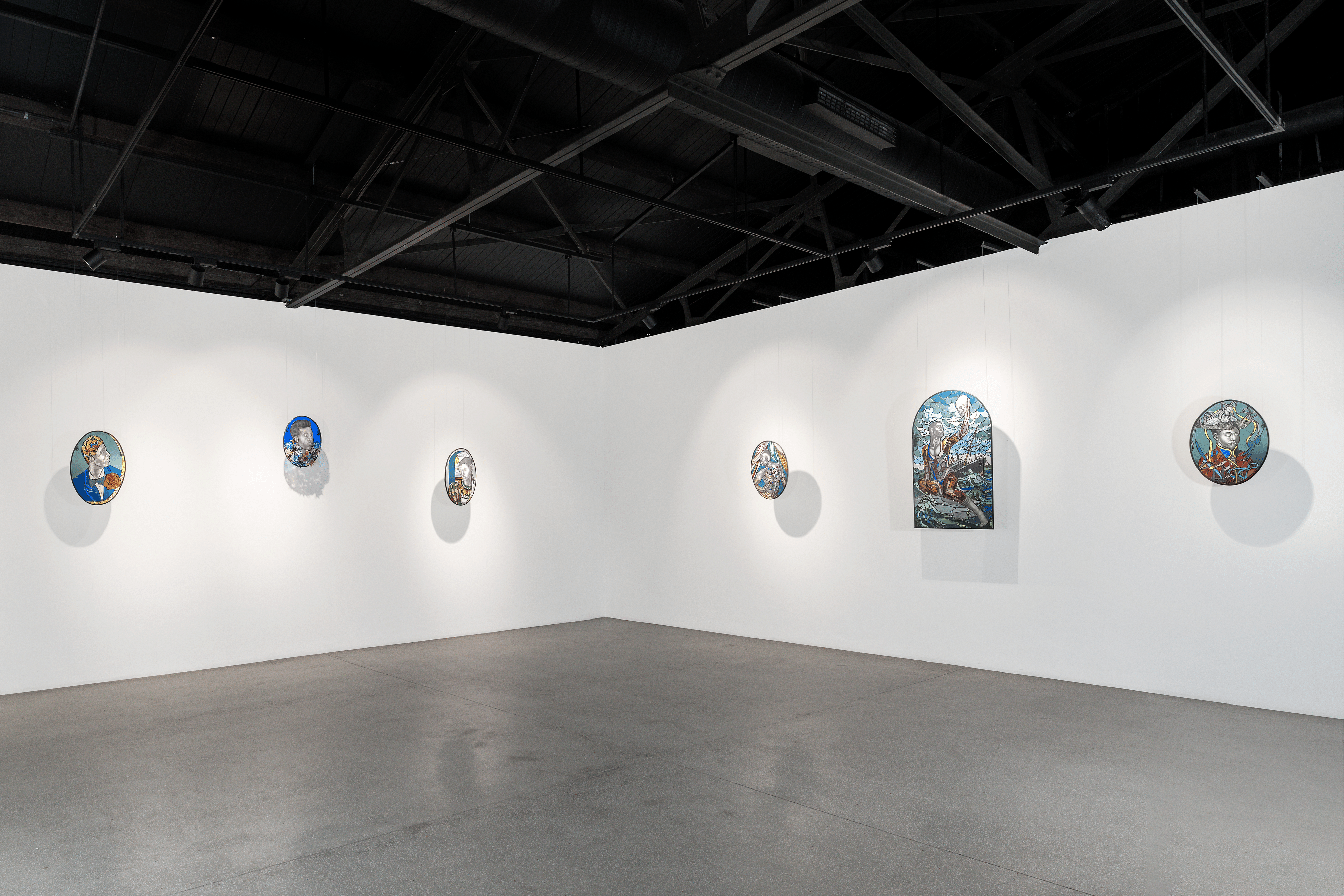
An installation shot of work in the gallery space by Athi-Patra Ruga. Image courtesy of WHATIFTHEWORLD.
The gallery’s surrounding cultural fabric is in constant flux, shifting in accordance with the ebbs and flows of a rich urban sector. Such an evolution certainly contributes to the energy driving WHATIFTHEWORLD’s philosophy as an art space since its founding in 2009: “Part question, part purpose and part statement, their name anticipates the gallery’s programme: a host of ambitious projects that promote curiosity and thought.” For the gallery, it is vital to create an environment that offers artists the freedom to create impactful exhibitions, either as solo projects or as multi-disciplinary installations. These exhibitions locate discussions that are relevant to South Africa and Africa’s localities, while placing them in dialogue with the broader global contemporary art world, as seen in their extensive participation in international art fairs, museums and institutions.
SUBURBIA CONTEMPORARY
Barcelona, Spain
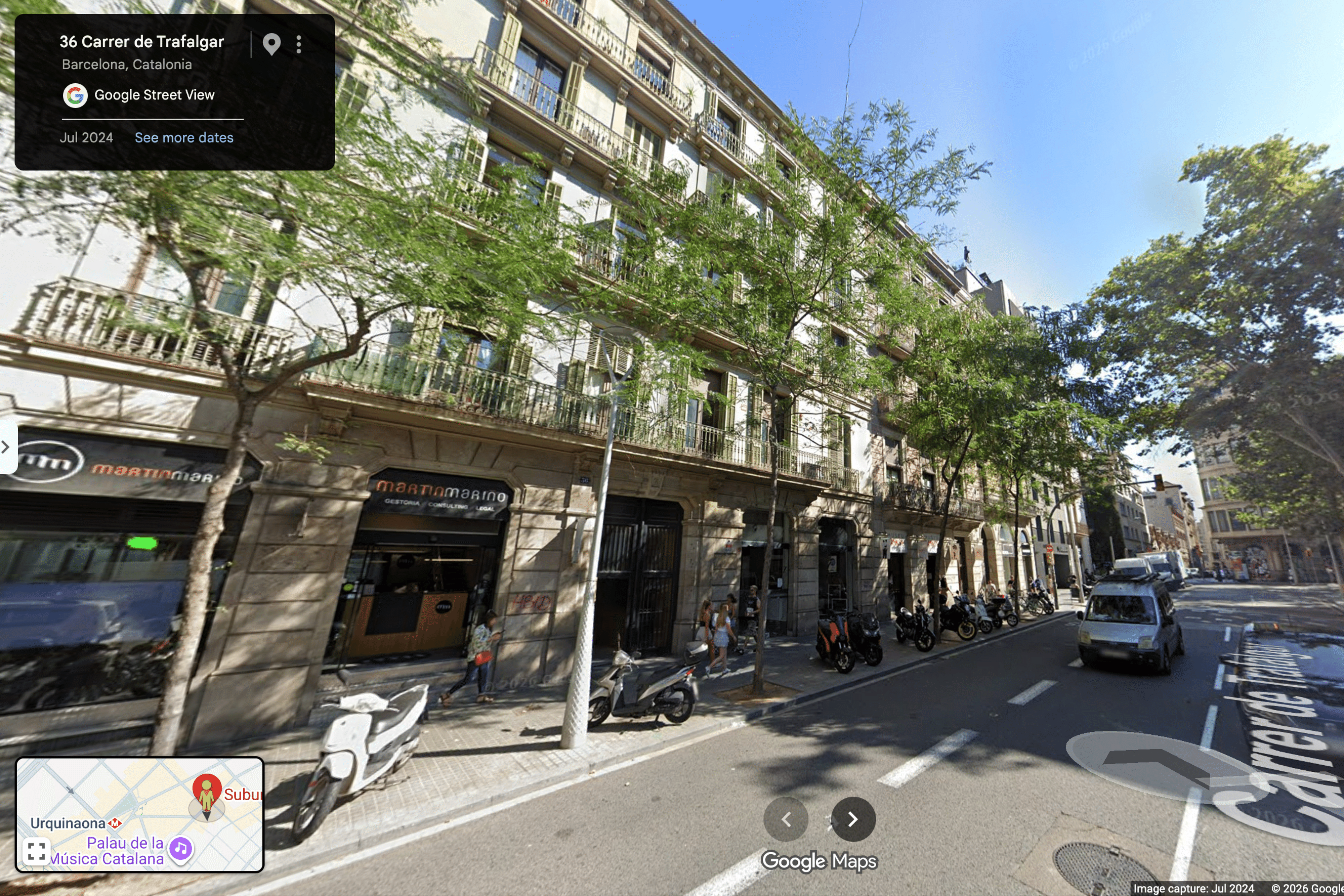
ON THE MAP | Suburbia Contemporary is situated in the heart of a dense art gallery community. Image courtesy of Google Maps 2026.
In Barcelona’s Zona Trafalgar neighbourhood, Suburbia Contemporary incorporates artistic dialogues from both the centre and the periphery of many art conversations across local and global networks.
Director Francesco Ozzola gives insight into what it means to be a gallery in Barcelona’s central neighbourhood, Zona Trafalgar: “There is something particular about being a gallery in Zona Trafalgar. In the centre of Barcelona, between Eixample and El Born, the neighbourhood has become a concentrated meeting point for contemporary art. Galleries, artists, curators, collectors and cultural institutions are all within walking distance, creating a density that is difficult to reproduce elsewhere in the city. You do not simply come to Zona Trafalgar to visit one gallery. You move through it. For Suburbia Contemporary, this makes a difference. Our space in Barcelona is part of an environment where encounters happen naturally. An exhibition becomes a reason to enter the neighbourhood; one gallery leads to another; a conversation continues over coffee; an artist discovered in one space reappears in another context. The physical proximity between galleries creates an exchange that is valuable precisely because it is not programmed. It is part of everyday life. This is the kind of community Suburbia Contemporary wants to be part of.”
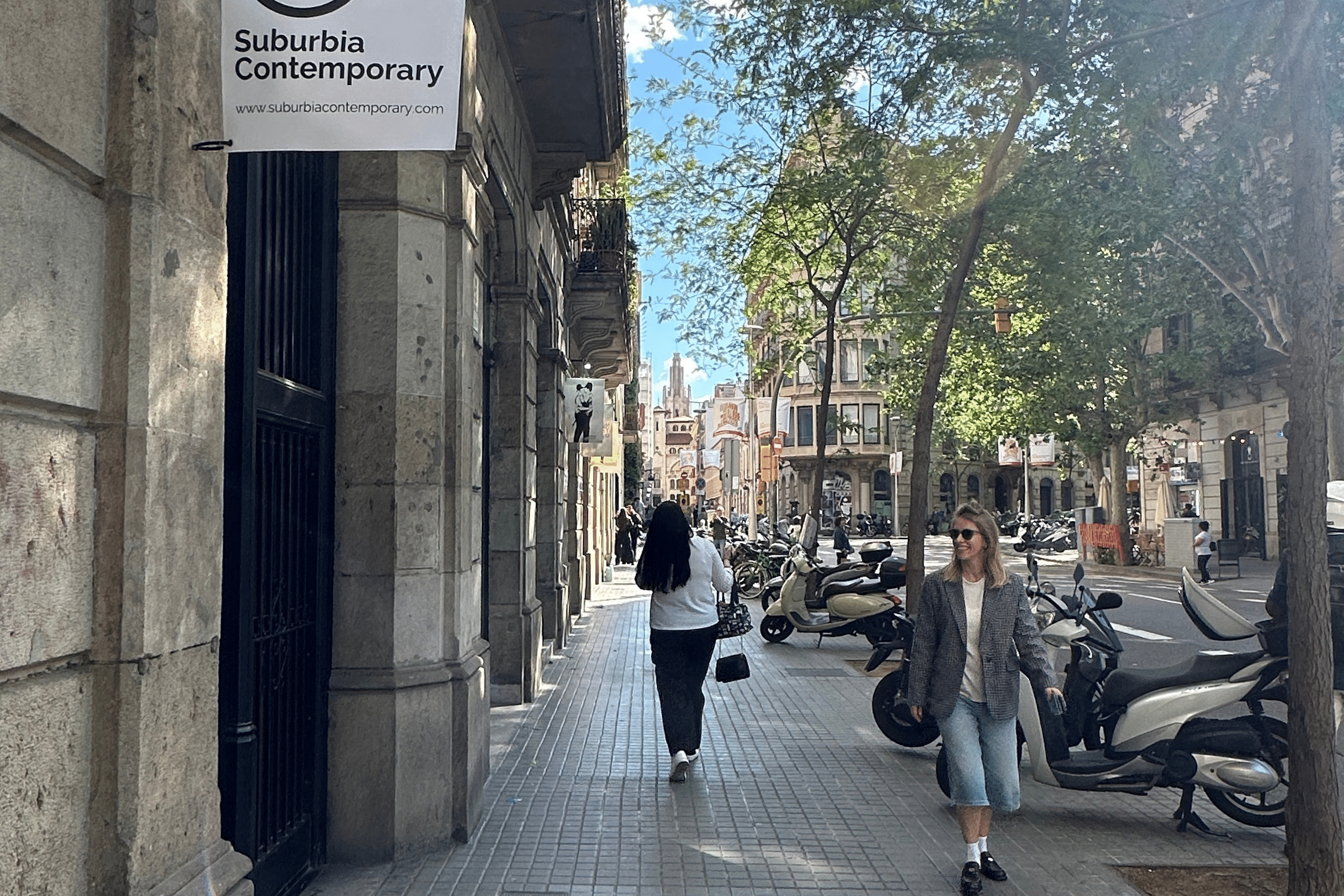
Following its nomadic beginnings, Suburbia Contemporary is now based in Barcelona. Image courtesy of Suburbia Contemporary.
Before it became a gallery, it operated as ‘Satellite’, a project space first based in the creative Cape Town suburb of Woodstock before moving to Florence. After that, Suburbia Contemporary developed into a gallery space based in Leipzig’s Spinnerei, where it presented a total of twelve exhibitions. “These different contexts have allowed us to encounter very different art scenes and communities. They have also reinforced something that remains central to the way we work: a gallery is shaped as much by its surroundings as by its programme.” From its truly international beginnings, Suburbia Contemporary continues to participate in global art fairs and pop-ups while maintaining a permanent presence in Barcelona.
“Barcelona offers us the possibility of being firmly rooted in one place while maintaining the international character that has always defined Suburbia Contemporary. The gallery works with emerging and established artists across different media and geographies, bringing different perspectives into the same space. Being located within a dense local art community gives those encounters a physical context.”
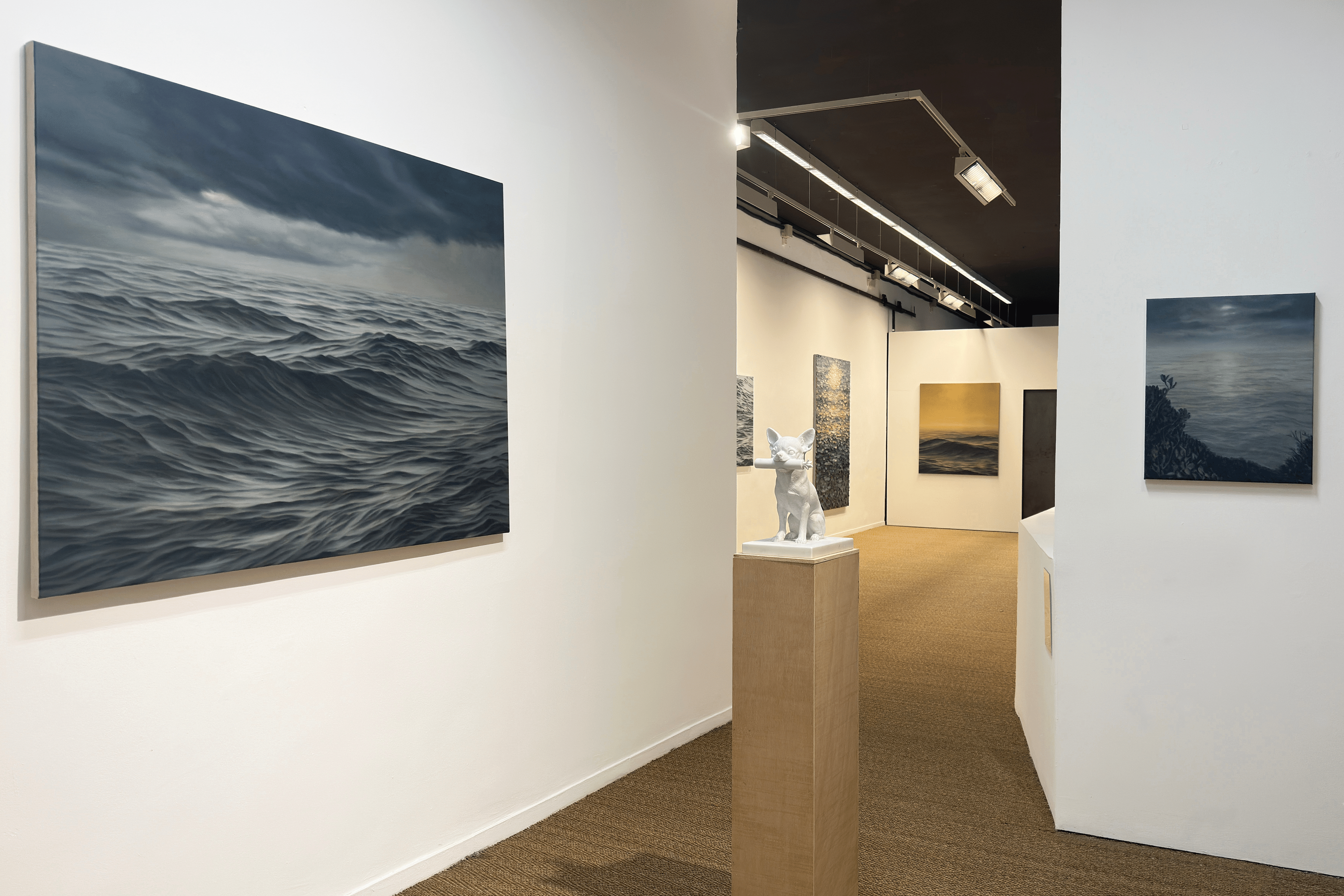
A look into two recent shows at the gallery featuring the artwork of Jake Aikman and Ed Young. Image courtesy of Suburbia Contemporary.
As the gallery’s name suggests, physical context is a central notion in Suburbia Contemporary’s identity. ‘Suburbia’ refers to a space that exists beyond an established centre, where independence and experimentation help to propel new ideas forward. While the gallery’s current location remains central in Barcelona, the openness and innovation, concepts derived from existing more on the outside, continue to direct its programming. Its network also retains the global character of the gallery’s early days. “Some of the communities that matter most to Suburbia Contemporary are not geographically close. Cape Town, in particular, remains an important part of our story. The artists, curators, collectors and professionals we have met there have supported the gallery throughout the years, and our continued participation in Investec Cape Town Art Fair has strengthened those relationships. That community has become part of the gallery’s wider network, even as our physical home has changed.”
Goodman Gallery
Johannesburg and Cape Town, South Africa, London, UK, and New York, USA
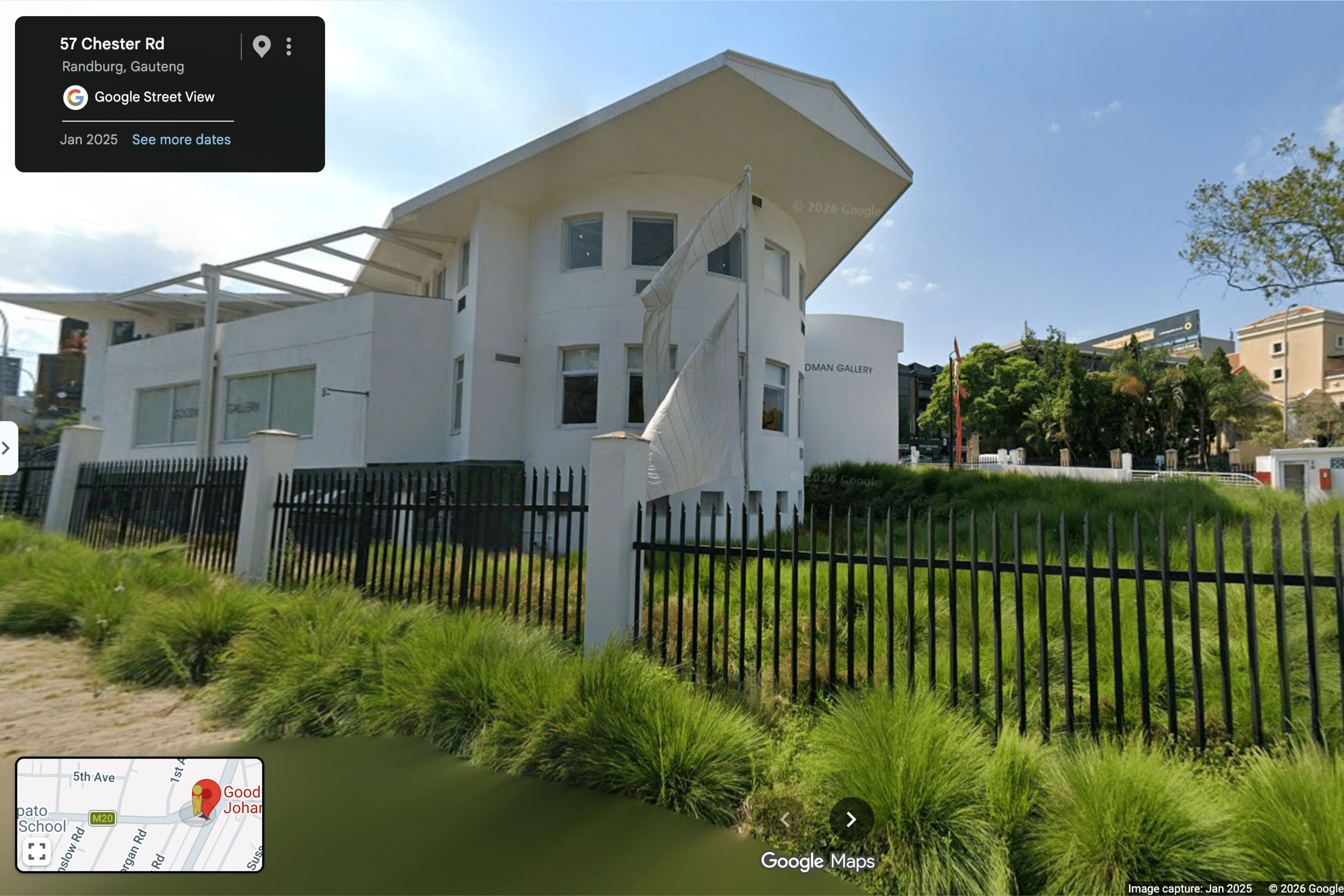
ON THE MAP | Goodman Gallery was founded in Johannesburg in 1966. Image courtesy of Google Maps 2026.
Goodman Gallery is one of the oldest contemporary art galleries in Africa, bridging critically engaged conversations across the globe from its four gallery spaces in Johannesburg, Cape Town, London, and New York.
This year marks the gallery’s 60th year, a significant period of programming characterised by contemporary practices rooted in Africa, its diaspora, and the broader Global South. Alongside its exhibition programme, Goodman Gallery develops artist projects, publications, editions, public programmes and international collaborations. The gallery also supports initiatives that encourage dialogue and exchange between artists, institutions and audiences across different regions.
These far-reaching dialogues place the Global South within various cultural ecosystems, both situated within the Global South, but also spanning beyond it to ensure adequate representation amongst critical conversations taking place in the Global North. Goodman Gallery’s list of four locations is important for doing just that. As the team commented: “The gallery’s history is closely connected to the development of contemporary art in South Africa. Since its founding during apartheid, Goodman Gallery has supported artists working across racial, political and social boundaries and has continued to champion practices engaging with questions of identity, history, place and representation. Today, the gallery brings this history into an international context, connecting artists from Africa and the Global South with audiences, institutions and collectors around the world.”
The first Goodman Gallery space is in the creative Johannesburg community of Parkwood: “Johannesburg is where Goodman Gallery was founded… The city remains central to the gallery’s identity. Our space is located in Parkwood, an area with a strong concentration of galleries and cultural spaces. Johannesburg’s dynamic contemporary art scene and complex social and political history continue to provide an important context for the artists and practices we present.”
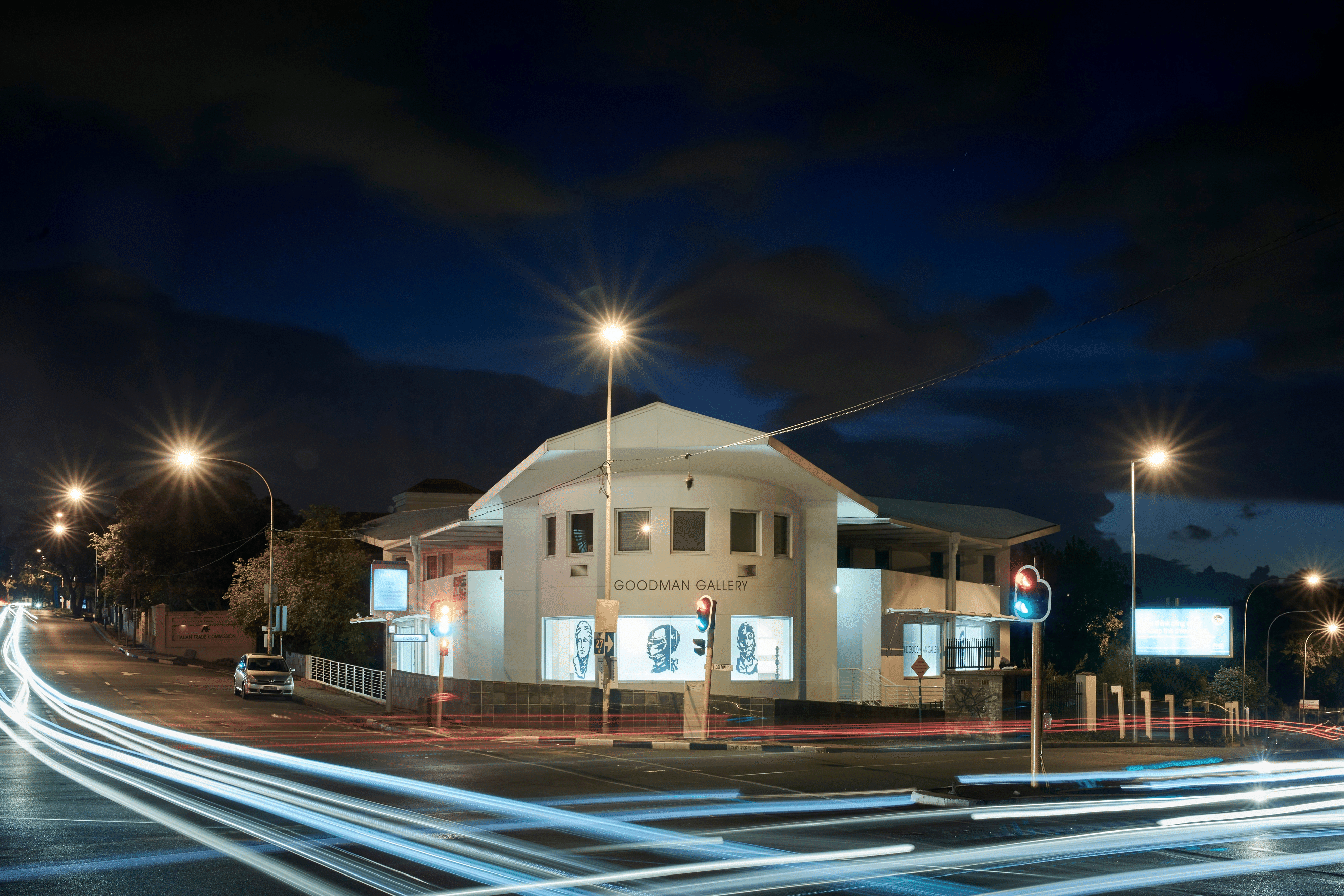
The gallery's original space in Johannesburg continues to co-exist with the city's creative community. Image courtesy of Goodman Gallery.
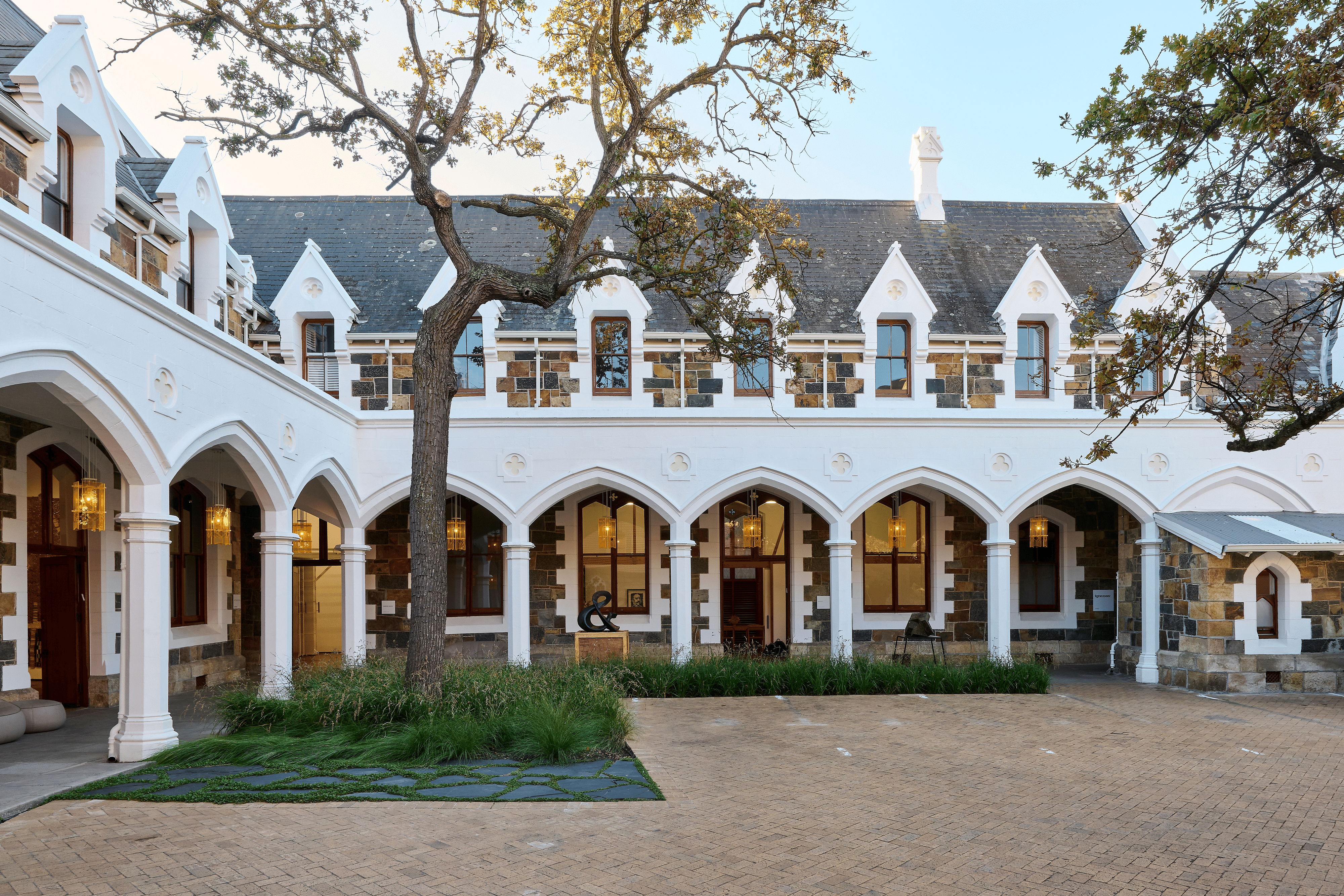
Goodman Gallery has had a presence in Cape Town for many years, but has been based in its current space since 2020. The building housing the gallery is a former convent, built in 1910. Goodman Gallery Cape Town inaugurated their move to this historic location with its debut exhibition ‘Did you ever think there would come a time?’, which took its title from a painting by Pamela Phatsimo Sunstrum, reflecting renewal in the transformed space and in its expanded programming. It was presented under the eaves of the cloister.
“Our Cape Town gallery is located on Somerset Road in Green Point and De Waterkant, a neighbourhood close to the city centre and the V&A Waterfront. Cape Town has a vibrant contemporary art community, with galleries, museums, studios and creative spaces across the city. The gallery’s location connects us to this community while providing a platform for artists from across Africa and the Global South.”
The historic building housing the gallery's current Cape Town location on Somerset Road. Image courtesy of Goodman Gallery.
London’s Mayfair neighbourhood became home to Goodman Gallery’s first international location seven years ago: “Goodman Gallery London is located on Cork Street in Mayfair, one of London’s most established gallery districts. Surrounded by galleries, auction houses and cultural institutions, the area has a long history within London’s art world. Since opening in 2019, the gallery has brought its programme, rooted in Africa and the Global South, into this international context.” This international context now includes a New York viewing room, which opened in 2023 to establish more presence in the United States.
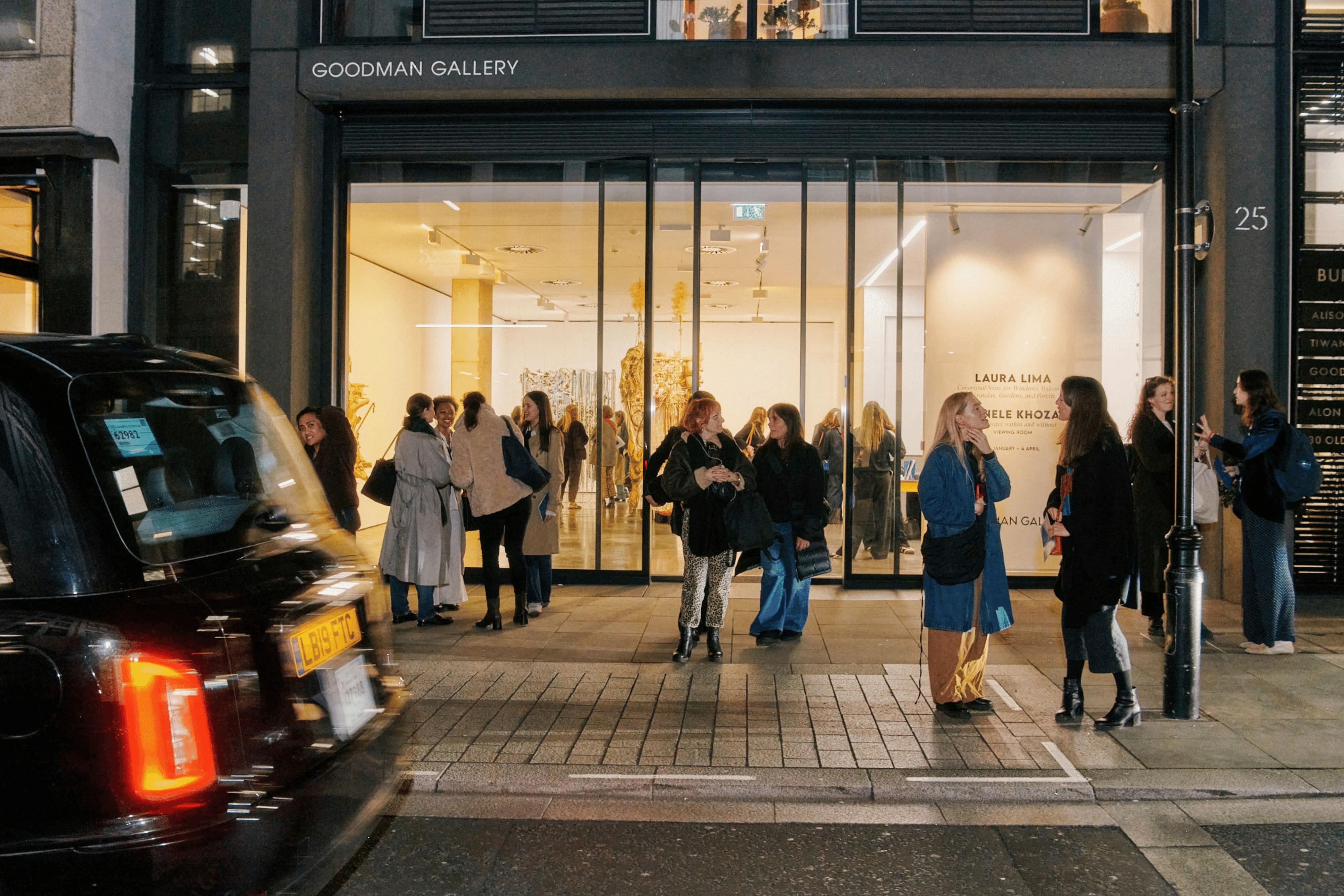
Goodman Gallery in the iconic London art location of Cork Street. Image courtesy of Goodman Gallery.
Commenting on this news at the time of opening the gallery’s New York space, Goodman Gallery’s Director, Liza Essers, had remarked: “Finally, the world is really paying attention to artists from the Global South… ”
kó
Lagos, Nigeria
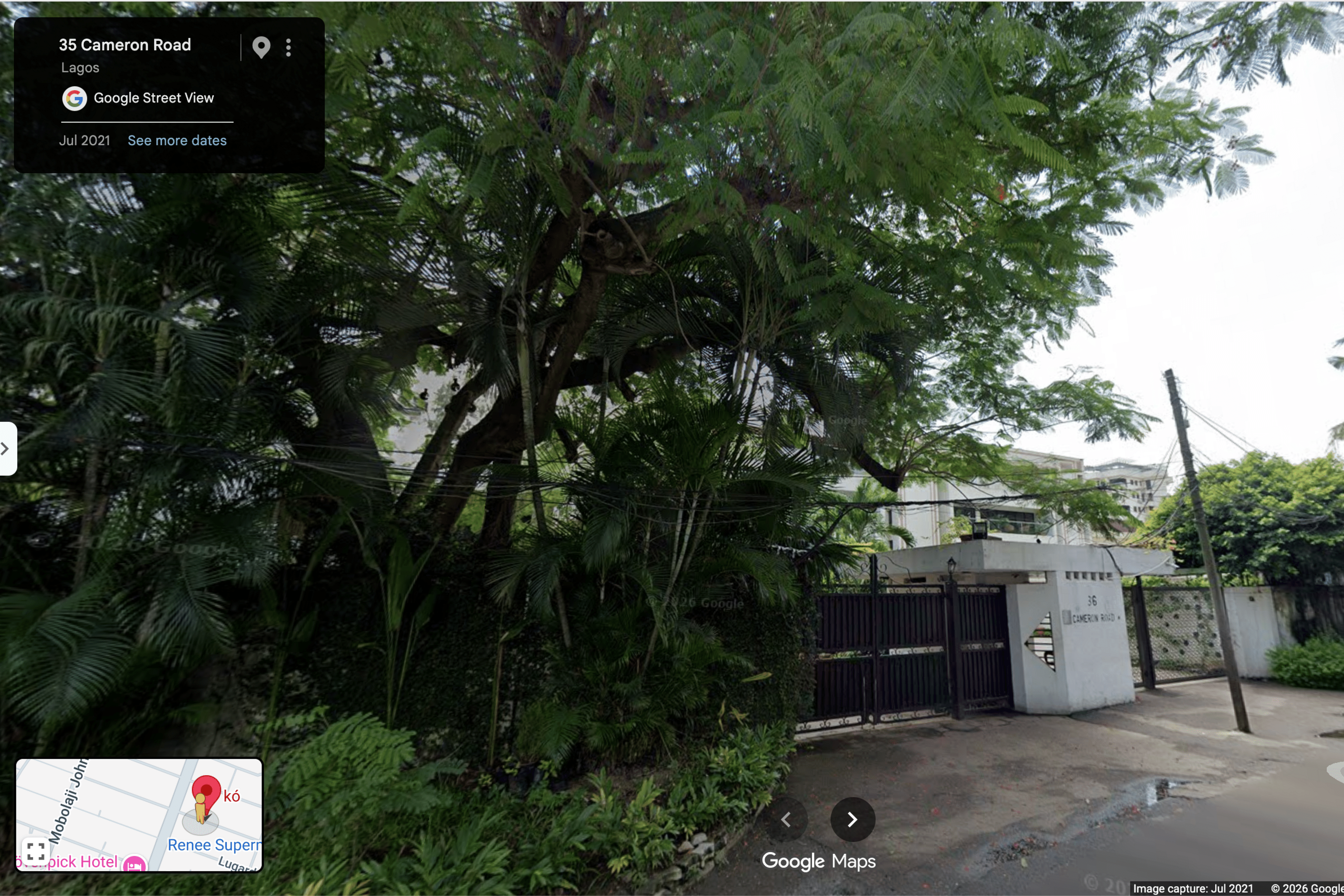
ON THE MAP | kó is nestled behind lush trees amongst Ikoyi’s economic and cultural buzz. Image courtesy of Google Maps 2026.
From its gallery space in the prestigious Lagos neighbourhood, Ikoyi, kó focuses on modern and contemporary art from Nigeria, the African continent, and its diaspora.
kó was founded in 2020, and continues to show a selection of both solo and group exhibitions at its gallery. In kó Founder Kavita Chellaram’s words, while announcing the opening of the gallery in 2020: “In the Yoruba language, kó translates as a verb ‘to gather’ or ‘to build’. Our aim is to support the creativity of contemporary art in Africa by providing a platform to communicate, share and grow.” While it was certainly unexpected to open a gallery during a global pandemic, the gallery’s opening spoke to a collective search for normalcy during a particularly uncertain and challenging moment in our contemporary history.
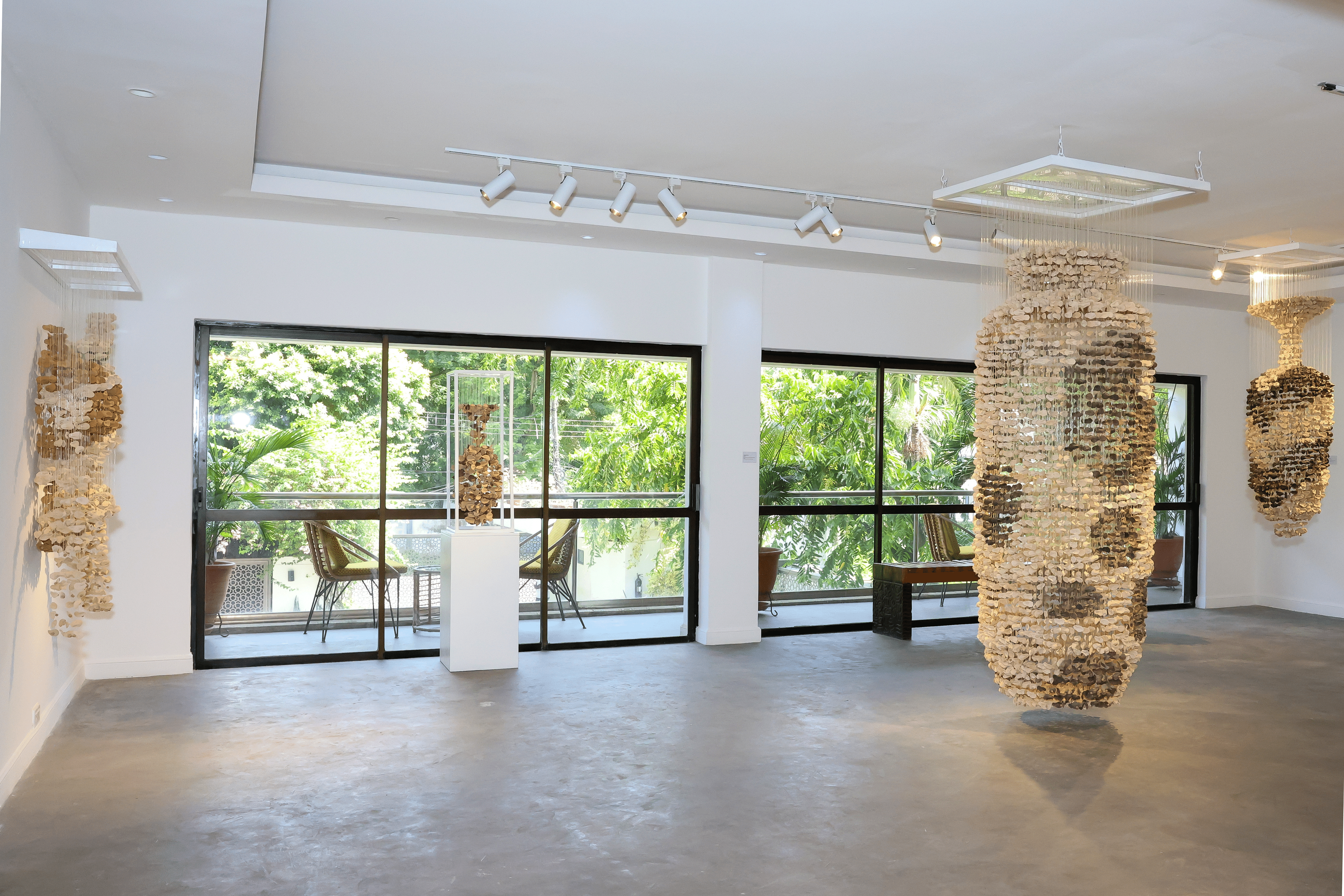
A view of the gallery's surrounding trees during the exhibition, 'XX' by XX. Image courtesy of kó.
Six years on, the gallery space plays an important role in bridging artistic languages of the past and the present. Its programming incorporates both emerging and established voices of the current moment alongside projects that also highlight the lineage of these creative practices. For example, it highlights Nigerian modern artists from the 1940s to the 1980s, as well as discourses regarding Nigeria’s modernist and post-colonial art movements.
These cultural efforts are rooted in kó’s physical space located close to the Lagos Lagoon. Gallery Manager Otsholeng Poo explained the nature of the gallery’s neighbourhood: “kó is located in Ikoyi, Lagos State. As one of the most affluent and prestigious neighbourhoods in Lagos, Nigeria, Ikoyi is well-known for its luxury real estate, diplomatic missions, high-end commercial hubs and galleries.”
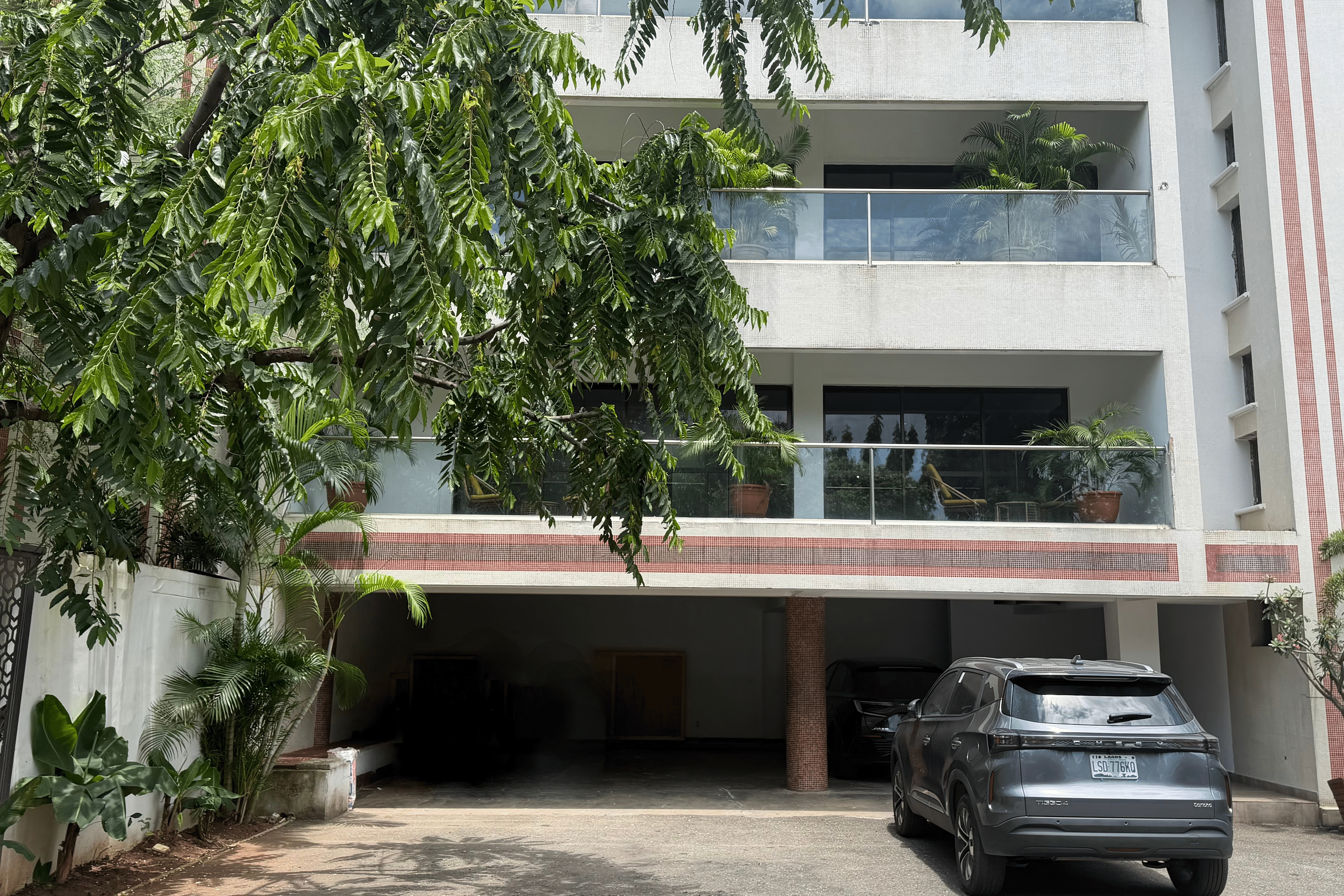
An exterior view of kó gallery. Image courtesy of kó.
The gallery’s perspective remains rooted in a passion for the historic and contemporary successes of Nigeria’s vibrant art community, while Ikoyi’s global reach ensures that such a crucial perspective on Nigerian culture is integrated into international contemporary discussions.
EBONY/CURATED
Cape Town and Franschhoek, South Africa
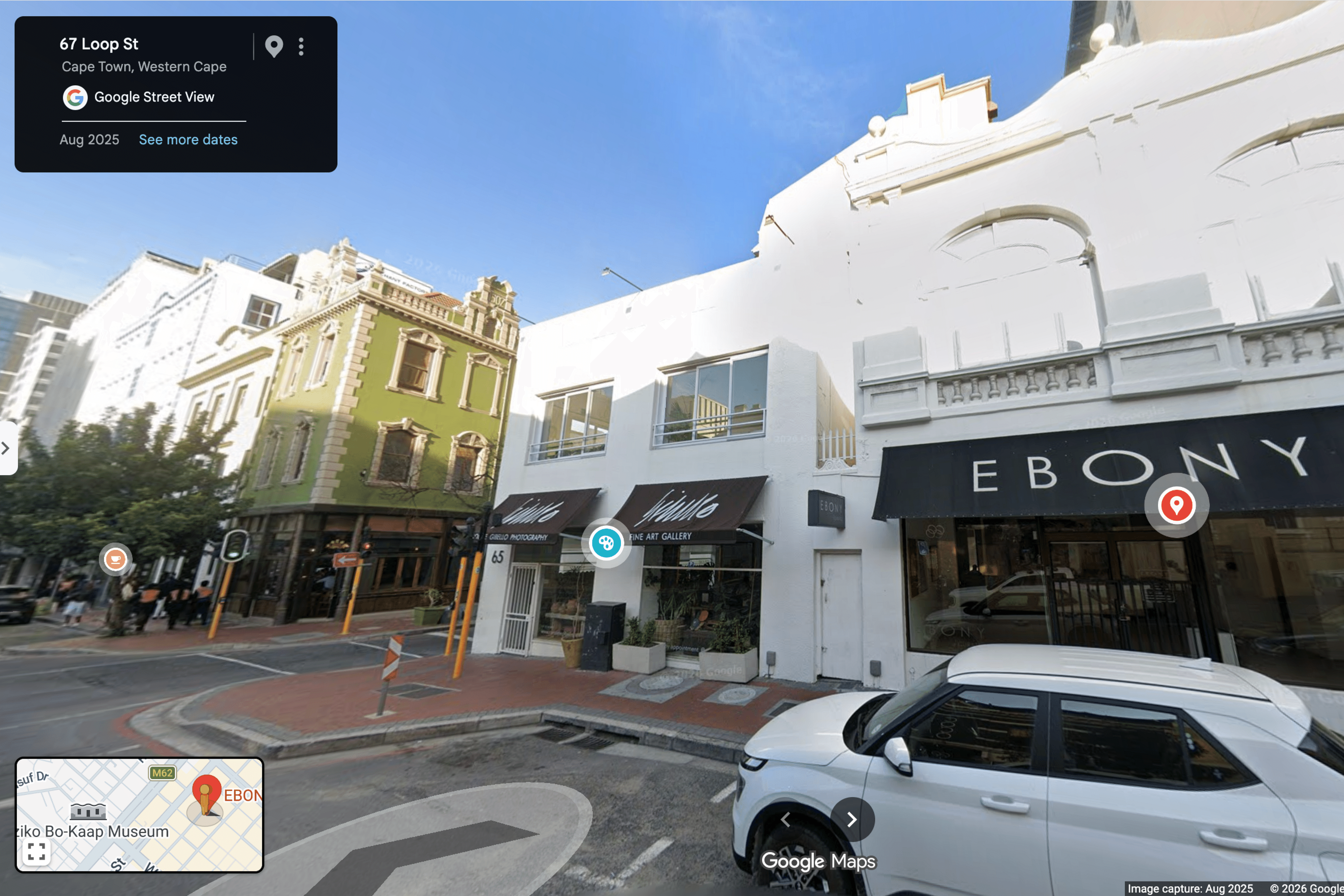
ON THE MAP | EBONY/CURATED's Loop Street space in Cape Town. Image courtesy of Google Maps 2026.
Nurturing emerging talent and critical conversations across its gallery spaces in Cape Town and Franschhoek, EBONY/CURATED presents contemporary and modern artworks by significant creative voices from across the region.
At the heart of EBONY/CURATED’s presence in Cape Town is its first gallery space on Loop Street, which locates the gallery within the inner-city’s hub of art spaces. As Director and Head Curator Marc Stanes commented, “Being in the centre of the city, our Cape Town gallery serves as a hub for artists and curators, and it’s from this space that we plan all our exhibitions and art fairs. Being surrounded by so many other galleries and industry participants adds to the dynamic aspect of this vibrant and creative city.”
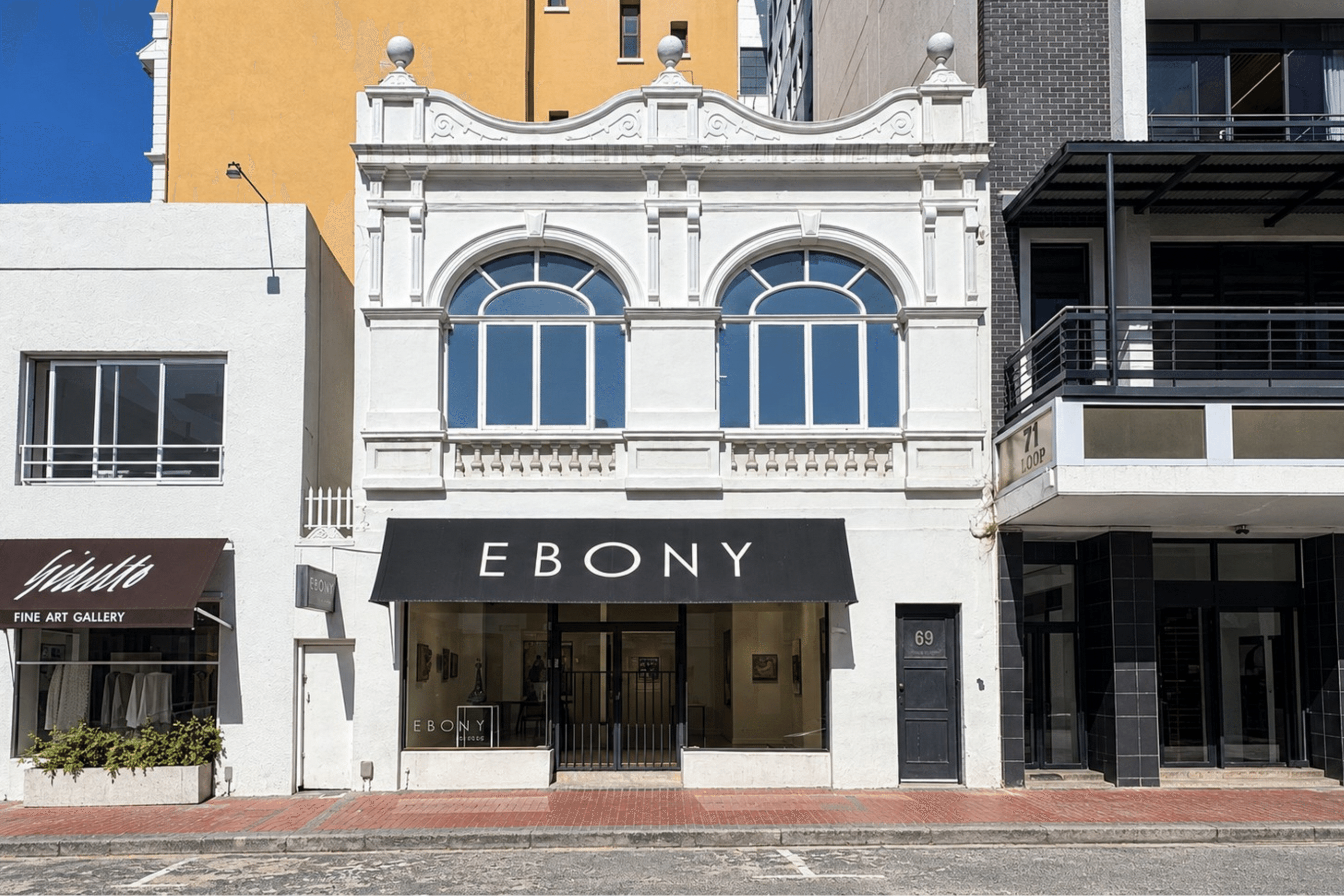
Over the past fifteen years, the space has established itself as a longstanding presence within Cape Town’s cultural landscape, with a year-round programme of exhibitions and presentations. Image courtesy of EBONY/CURATED.
A short walk from other independent galleries in the city, EBONY/CURATED’s Loop Street space is also close to many other facets of urban life and creative communities, including artist studios, cafes, tailors, street vendors, and bespoke jewellers.
It’s an important meeting point, bringing together the gallery’s wider programme across its other locations, which includes bringing together artists, curators, collectors and audiences through exhibitions, artist-led initiatives, talks and other public-facing events. It also encourages conversation between the other galleries in the area. “We are fortunately located within a cluster of contemporary spaces that easily allow for ease of access to galleries and cultural venues across the central city’s district, where a day into night is as much about walking the city as it is about experiencing art. You can get the clearest expression of how tightly the inner city’s art scene and street life are bound together.”
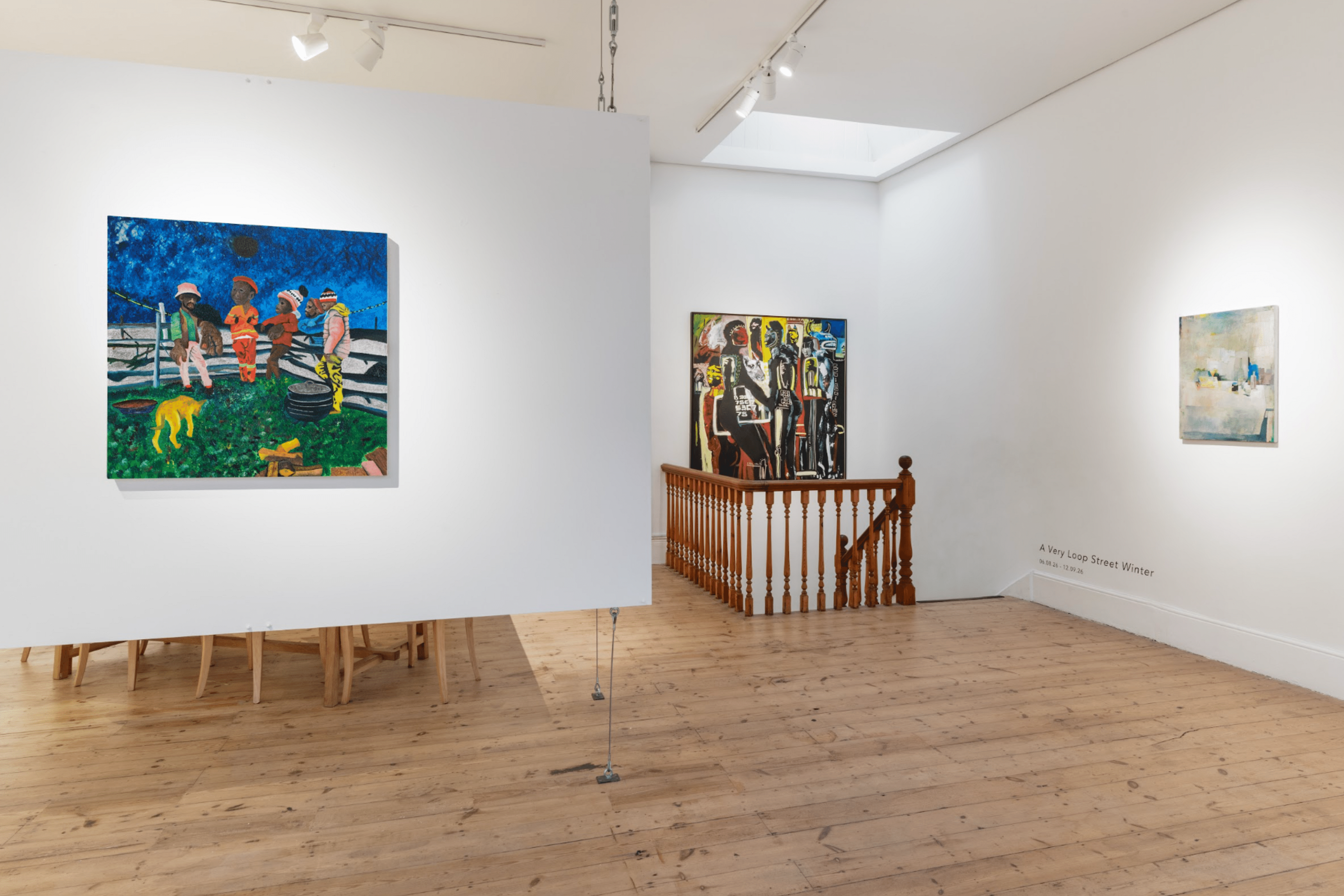
A look into the gallery's interior space during their group exhibition, 'A Very Loop Street Winter'. Image by Dillon Marsh, courtesy of EBONY/CURATED.
From Cape Town’s inner city to international participation at exhibitions such as the 61st International Exhibition of La Biennale di Venezia, In Minor Keys: EBONY/CURATED represents critical conversations on the African continent and its wider diaspora from the rich cultural fabric of Loop Street.
With gratitude to the teams at WHATIFTHEWORLD, Suburbia Contemporary, Goodman Gallery, kó, and EBONY/CURATED, who generously provided supporting information and photographs for this story.